
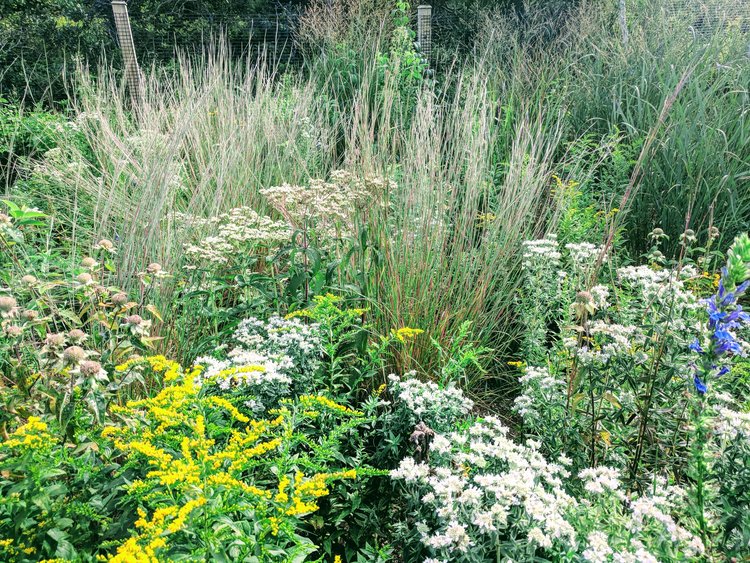
On Nantucket, where native ecosystems like sandplain grasslands and coastal habitats are rare and precious, converting traditional lawns into meadows is a meaningful way to protect our environment. Lawns often demand excessive watering, mowing, and chemical inputs that can harm Nantucket’s delicate ecosystems and contribute to issues like nutrient pollution in our ponds and harbor.
By replacing lawn with native meadow plants, you create a low-maintenance landscape that supports biodiversity, provides habitat for pollinators, and enhances the island’s natural beauty. Native meadows also help preserve Nantucket’s heritage by promoting plants that are uniquely adapted to our sandy soils and maritime climate.
Below are practical steps inspired by Sara Weaner Cooper’s success, tailored to help you create a vibrant and sustainable meadow right here on Nantucket.
Preparation:
Communicate intentions to neighbors: Place a visible sign, such as “Native Meadow in Progress,” to explain your efforts and invite conversations. Use our printable template for your yard or send it your local printer for a yard sign format.

Plan the Design: Visualize the meadow layout with strategically placed plant groupings or drifts. Consult resources or experts for guidance.
Initial Lawn Preparation:
Weaken Existing Turfgrass: Apply sulfur to lower soil pH, reducing nutrient availability for turfgrass while benefiting native plants.
Mow the lawn as short as possible.
Disturb the Soil: Use a dethatcher or power rake to disrupt the shallow root system of turfgrass and thin it out. This allows more light to reach the soil, preparing it for seeds.
Planting: Plant Live Plants First (Fall): Introduce transplants in drifts, mixing species or grouping single species like blue wild indigo and clustered mountain mint. This ensures some visual impact earlier in the process.
Seed Meadow Plants (Winter): Overseed the area with meadow species after another round of dethatching.
Maintenance During Establishment:
Mow Strategically: Mow the lawn short around transplants to keep turfgrass at bay. Gradually raise the mower height as seeded plants grow taller than the grass. Stop mowing when seedlings are well-established.
Weed Whip as Needed: Use a weed whip in key areas to reduce competition and give native species an advantage.
Long-Term Care:
Annual Mowing: Mow the entire meadow once a year, typically at the end of March, to maintain balance in the ecosystem.
Tend to the Meadow Over Time: Remove invasive plants, such as burning bush, and continue to monitor plant development.
Allow the native plants to outcompete temporary weeds, like dandelions.
Engage and Learn:
Learn Plant Identification:
Recognize newly sprouting seedlings to favor desired species and manage weeds effectively. Seek help from guides, apps, or knowledgeable mentors.
Adapt as Needed:
Treat the process as a conversation with the land, adjusting based on plant and ecological responses.


Leave a Reply